


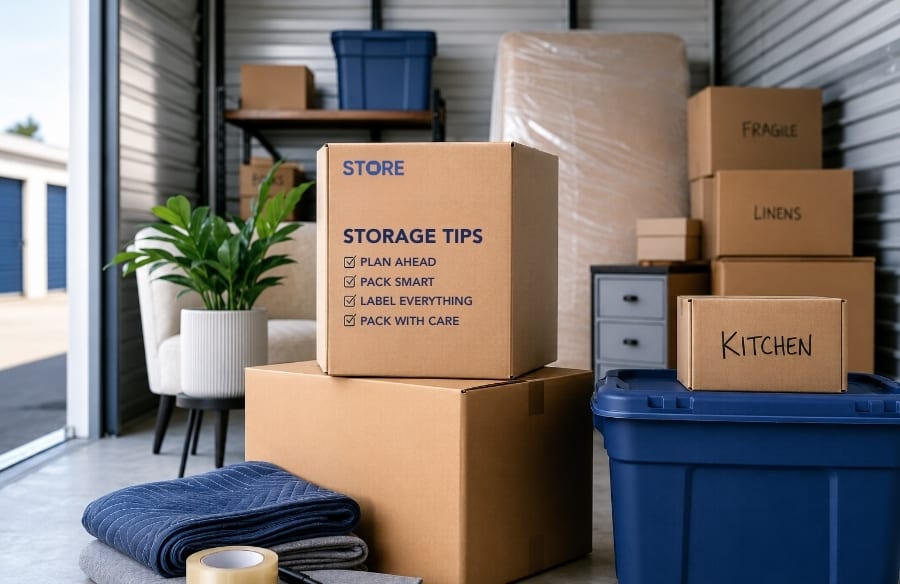
How to Pack Your Storage Unit
Packing your storage unit the right way can help you make the most of your space, protect your belongings, and make future visits easier. Whether you are storing furniture, business items, seasonal décor, documents, clothing, or household goods, a little planning can make the entire storage experience smoother.
Use these storage tips to help organize, pack, and load your unit with confidence.
Before You Start Packing
A successful storage experience starts before moving day. Take time to sort, clean, label, and plan before loading your unit.
Make a Plan
Create a simple timeline leading up to moving day. Work room by room or closet by closet so the process feels manageable. Start packing items you do not use every day, then leave essentials for last.
Sort What You’re Storing
Before you pack, decide what you want to keep, donate, sell, or throw away. If something is broken, expired, or no longer useful, moving it into storage may only take up valuable space.
Gather Quality Packing Supplies
Use sturdy boxes, packing paper, bubble wrap, furniture covers, mattress bags, packing tape, and permanent markers. High-quality packing materials can help protect your items and make boxes easier to stack.
Label Everything
Clearly label each box with its contents and the room it belongs to. Mark fragile boxes clearly and keep a simple inventory list at home or in your office for reference. Numbering or color-coding boxes can also make it easier to find what you need later.
Packing Tips by Item Type
Different items need different packing methods. Use the tips below to help prepare common household and business items for storage.
Clothing, Bedding, Curtains, and Linens
Clothing, curtains, and drapes are best stored on hangers when possible. If hanging boxes are not available, fold fabric items carefully and store them in dresser drawers, cedar chests, or clean storage containers. Bedding and linens should be clean and dry before storing.
Appliances
Refrigerators and freezers should be thoroughly cleaned, defrosted, and dried before storage. Leave doors slightly open while in storage to help with airflow. Stoves, refrigerators, freezers, and other appliances should be clean and dry before being stored.
Some items may be stored inside large appliances, but make a note of anything placed inside so you can find it later. Boxes may be stacked on top of sturdy appliances if the surface is clean, dry, and stable.
Dishes and Glassware
Use packing paper or cushioning at the bottom and top of boxes containing dishes or glassware. Wrap each glass, plate, bowl, saucer, and platter individually. Plates and platters are best packed on their edge rather than stacked flat.
Fill open spaces with packing paper to reduce movement inside the box. Label these boxes as fragile and avoid placing heavy items on top.
Furniture
Clean furniture before storing it. When possible, disassemble beds, tables, and other large pieces to save space. Wrap table legs and delicate surfaces with packing paper or padding.
Use dresser drawers for linens or small, lightweight items. Keep upholstery off the floor and cover furniture with a breathable fabric cover, such as a clean sheet. Avoid using plastic directly on upholstered furniture for long periods, as it can trap moisture.
If you are storing sofas or mattresses on end, make sure they are stable and properly protected.
Books and Documents
Pack books flat to help protect their spines. Because books can get heavy quickly, use small boxes and avoid overpacking. Fill empty spaces with packing paper so books do not shift during transport.
For documents, records, or files, use sturdy boxes and clearly label them. Avoid storing fragile items in the same box as books or documents.
Holiday Decorations
Whenever possible, save the original boxes for delicate ornaments and seasonal décor. Wrap fragile decorations in packing paper or newsprint, and use padding to reduce movement inside the box.
Wrap strings of lights around a piece of cardboard before placing them in a box to help prevent tangling.
Mirrors, Artwork, Glass, and Screens
Mirrors, framed artwork, glass panels, windows, and screens should be stored upright on their edge, not flat. Use mirror or picture boxes when available, and add padding to protect corners and surfaces. Mark these boxes clearly as fragile.
Lamps and Lampshades
Wrap lamp bases with padding before placing them in boxes. Pack lampshades separately, and avoid using newspaper directly on shades or delicate materials because ink can transfer. Do not place heavy items on top of boxes containing lamps or lampshades.
Tools, Bicycles, and Metal Items
Clean tools, bicycles, and other metal items before storing. To help reduce the chance of rust, wipe metal surfaces with a rag containing a few drops of machine oil.
Long-handled tools such as rakes, shovels, and hoes should be cleaned, lightly oiled if needed, and tied together in bundles.
Mark Your Calendar
Make a timeline leading up to moving day for cleaning out, labeling, and organizing your life before you move. Take a little time each week or day to check off the list, one room or closet at a time.
How to Load Your Storage Unit
How you place items inside your unit matters. A well-loaded unit can help protect your belongings, make better use of space, and make future access easier.
Use Similar-Sized Boxes
Whenever possible, pack items in boxes of the same or similar size. This makes stacking easier and helps create a more stable layout.
Manage Box Weight
Pack heavy items, such as books and tools, in small boxes. Try to keep boxes at a manageable weight so they are easier and safer to lift. Avoid overpacking boxes until they bulge, and avoid underpacking boxes so they collapse when stacked.
Keep Frequently Used Items Near the Front
Store items you may need sooner near the front of the unit. Seasonal items, tools, business supplies, or important documents should be easy to reach without unpacking the entire space.
Create an Aisle
Leave a walkway through the center or side of your storage unit so you can reach items in the back. This makes future visits faster and keeps your unit easier to manage.
Leave Room for Airflow
Leave a little space around the perimeter of the unit to support ventilation. Do not pack items so tightly that air cannot circulate.
Keep Items Off Concrete Floors When Needed
For items that may be sensitive to moisture, consider using pallets, skids, shelving, corrugated cardboard, or a protective mat to keep boxes and furniture off concrete floors.
Use Vertical Space Carefully
Stack lighter boxes on top of heavier boxes, and keep fragile items higher and clearly marked. Use shelving if available, especially for business items, documents, or boxes you plan to access often.
Moving Day Checklist
Use this quick checklist to stay organized on moving day:
- Finish packing and labeling boxes.
- Keep essential items separate and easy to access.
- Empty, defrost, clean, and dry refrigerators and freezers.
- Cover mattresses with mattress bags if storing.
- Secure movable parts on appliances and furniture.
- Confirm utilities, address changes, and other move-related details.
- Return borrowed items and pick up items from repair shops.
- Discard flammable items such as gasoline, paint, or other hazardous materials before storing.
What Not to Store
For safety reasons, do not store flammable, hazardous, perishable, or illegal items. This may include gasoline, paint, propane tanks, fireworks, chemicals, food, plants, or anything that could create odor, damage, pests, or safety concerns.
Check with the STORE team if you are unsure whether a specific item can be stored.
Need Help Choosing a Storage Unit?
Not sure what size unit you need or how to prepare for move-in? Use our size guide or contact the STORE team for help finding the right storage option.
We’re here to help make storage simple, organized, and easy to manage.


